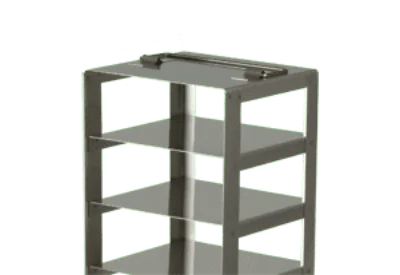
Stainless Steel Chest Rack for 19 Cryoboxes 136 x 136 x 32 mm
item number: 32195
Dimensions: approx. 141 x 141 x 662 mm (W x D x H) - with folding handle
Price on request

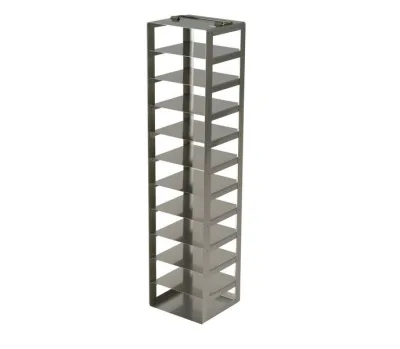
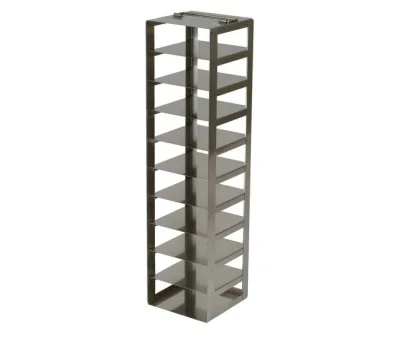
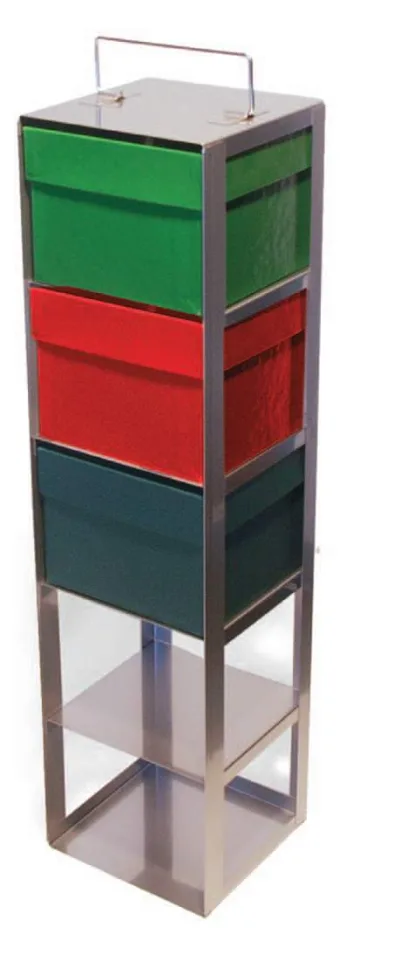
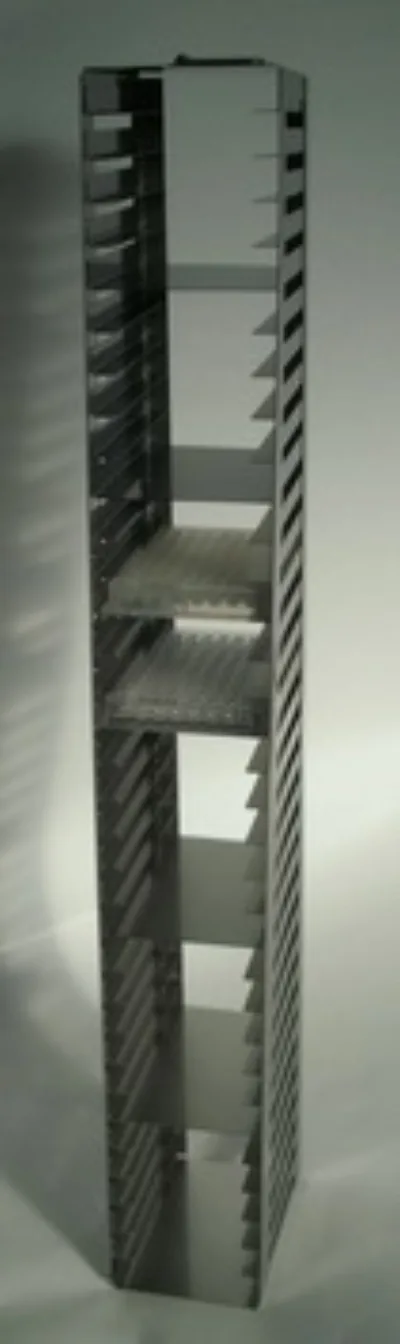
Robust stainless steel chest racks enable structured sample storage in chest freezers for laboratories, biobanks, and pharmaceutical facilities. These organisation systems are specifically designed to accommodate cryoboxes of various heights as well as microtiter plates. Vertical stacking allows for the efficient utilisation of available storage volume in research and diagnostics.
item number: 32195
Price on request
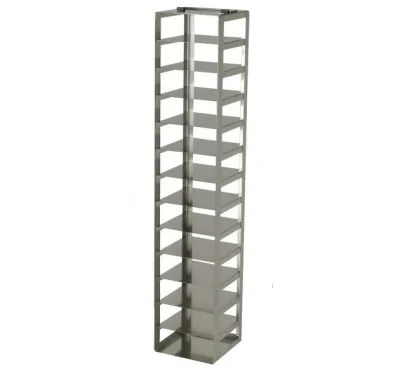
item number: 17056
Price on request
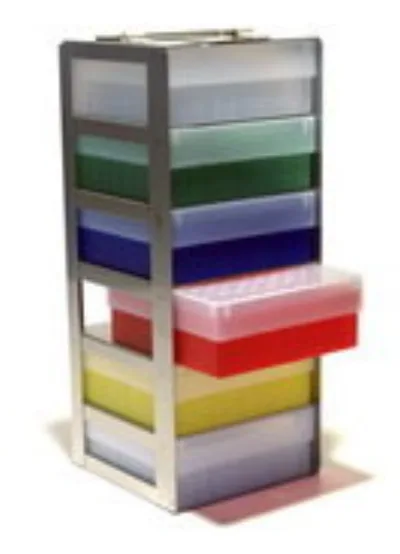
item number: 16603
Price on request
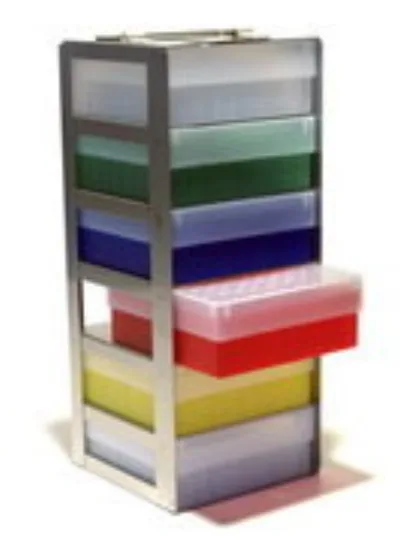
item number: 16604
Price on request
item number: 16606
Price on request
item number: 16607
Price on request
item number: 16610
Price on request
item number: 16612
Price on request
item number: 16613
Price on request
item number: 16616
Price on request
item number: 16620
Price on request
item number: 16623
Price on request
item number: 38891
Price on request
item number: 16626
Price on request
item number: 16627
Price on request
item number: 16628
Price on request
item number: 16629
Price on request
item number: 16632
Price on request
item number: 16590
Price on request
item number: 16591
Price on request
item number: 16592
Price on request
item number: 16593
Price on request
item number: 16595
Price on request
item number: 16598
Price on request
item number: 16599
Price on request
item number: 16600
Price on request
item number: 16564
Price on request
item number: 16565
Price on request
item number: 16566
Price on request
item number: 16567
Price on request
item number: 16568
Price on request
item number: 16569
Price on request
item number: 16570
Price on request
item number: 16571
Price on request
item number: 16589
Price on request
item number: 16572
Price on request
item number: 16573
Price on request
item number: 16574
Price on request
item number: 16575
Price on request
item number: 16576
Price on request
item number: 16577
Price on request
item number: 16578
Price on request
item number: 16579
Price on request
item number: 17039
Price on request
item number: 16580
Price on request
item number: 16581
Price on request
item number: 16582
Price on request
item number: 16583
Price on request
item number: 16584
Price on request
item number: 16585
Price on request
item number: 16586
Price on request
item number: 16587
Price on request
The chest racks listed here are made of high-quality stainless steel, ensuring high corrosion resistance and durability at ultra-low temperatures. Many models feature a practical folding handle, which facilitates the removal of the racks from the chest freezer. Precise manufacturing ensures stability when stacking numerous sample containers across the entire usable height of the unit.
The range includes racks for standard cryoboxes with a base dimension of approx. 136 x 136 mm. Variants are available for different box heights, including 33 mm, 50 mm, 75 mm, 100 mm, and 130 mm. Special racks for microtiter plates and various sample vessels are also available to allow for flexible organisation of different sample formats.
For optimal space utilisation, we offer specific racks tailored to the internal dimensions of well-known manufacturers. These include solutions for Haier chest freezers, SANYO/Panasonic freezers, Thermo Herafreeze (HFC models), as well as Forma freezers, SKADI, and New Brunswick. The selection of the appropriate rack depends on the internal usable height of the chest and the box grid used.
Here you will find answers to technical and organisational questions regarding storage in chest freezers.
Chest racks serve the vertical organisation of samples in chest freezers. They prevent the disorganised stacking of boxes and allow quick access to individual sample batches without having to move the entire inventory.
The selection is based on the internal usable height of the chest freezer minus a safety clearance for the lid. Additionally, the number of cryoboxes to be stored and their individual height (e.g., 50 mm or 75 mm) must be taken into account.
In cryopreservation, stainless steel is the preferred material because it remains dimensionally stable even at temperatures of -80°C or lower, does not become brittle, and is easy to clean and disinfect.
Racks for cryoboxes are designed for standard square formats (approx. 136 mm). Racks for microtiter plates have slots that are precisely matched to the footprint and the lower height of MTP plates.
A folding handle on the top of the rack is essential for ergonomics. It allows laboratory personnel to safely pull the entire rack up from the depth of the chest, even when wearing protective clothing.
Compatibility can be determined via the manufacturer lists for brands such as Haier, SANYO, or Panasonic. The dimensions of the interior and the number of compartments the rack is intended to hold are decisive.
By using stainless steel racks with fixed slots or stacking capacities, it is ensured that samples do not slip when lifted out. Clear labelling of the racks supports quick identification.