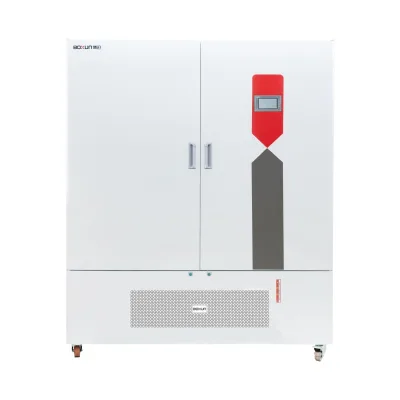
Drosophila Incubator 800 l Volume with Four Horizontal Light Fields, Demonstration Unit
item number: 39477
Temperature range 0°C - 70°C, LED lighting with daylight spectrum
In stock
€ 29.800,00
Promotional Price € 9.500,00

Laboratory incubators enable the controlled incubation of microorganisms in microbiological research, medical diagnostics, and biotechnology. These devices ensure a stable microclimate through precise temperature regulation and homogeneous interior conditions for bacterial or fungal cultures. The range includes various designs, such as forced-air laboratory incubators and specialised refrigerated incubators for different temperature requirements.
item number: 39477
€ 29.800,00
Promotional Price € 9.500,00
Incubators for microorganisms
Incubators play a central role in biology and medicine, enabling the controlled incubation of microorganisms.
Incubators create a microclimate with precisely regulated temperature conditions. Refrigerated incubators are available for specific applications.
Incubators are essential for research, development, and numerous applications where precise temperature control is central. These include:
Discover our incubators now and find the optimal solution for your application!
Here you will find answers to technical and application-related questions about our incubators and refrigerated incubators.
Laboratory incubators are primarily used for the cultivation of microorganisms such as bacteria, yeasts, or fungi. They are used in microbiology, medical diagnostics for patient swabs, as well as in biotechnological research and the analysis of soil samples.
The choice of size depends on the sample volume. Benchtop units from 25 litres are suitable for smaller laboratories or small sample quantities. For industrial applications or extensive test series, floor-standing units with up to 1000 litres of volume are available.
Standard incubators usually operate in the range above room temperature up to +80 °C. Refrigerated incubators extend this range downwards, enabling applications between -10 °C and +80 °C, while specialised Drosophila models are often adjustable between 0 °C and 70 °C.
A classic incubator is primarily designed for temperatures above ambient temperature. A refrigerated incubator features an additional cooling system to work stably at lower temperatures, which is necessary for certain microorganisms or storage tests.
When breeding organisms such as Drosophila, lighting is crucial alongside temperature. Incubators with LED light panels covering a daylight spectrum are useful here to support the circadian rhythm of the animals.
For a specialist selection based on your temperature requirements and the required volume, you can request an individual quote. Professional advice helps to identify the suitable design for your specific laboratory applications.
To avoid contamination, incubators should be cleaned regularly. Models with easily removable shelves and smooth interior housings facilitate this process. Precise temperature control also supports the stability of cultures during operation.