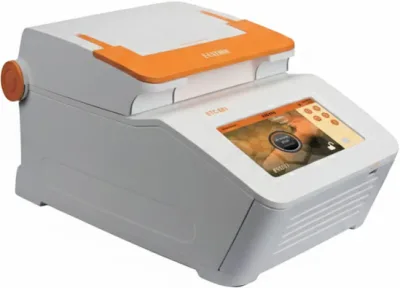
Thermocycler ETC821 Gradient with 96-Well Block
item number: 39405
Compatible with all standard high profile PCR plates, strips, and tubes
€ 4.200,00
Promotional Price € 2.500,00

Thermal cyclers for PCR and qPCR: Axon Labortechnik supplies gradient cyclers for endpoint PCR (ETC821 series, SensoQuest Labcycler — 48- to 384-well formats) as well as real-time thermal cyclers for quantitative PCR (eQ series — 16- and 96-well blocks, 2 to 6 detection channels). All systems operate on open reagent platforms.
item number: 39405
€ 4.200,00
Promotional Price € 2.500,00
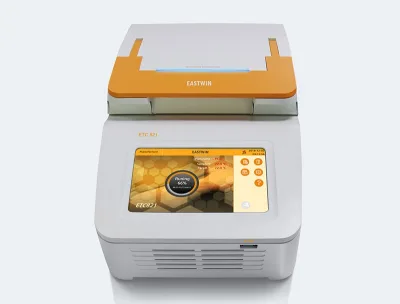
item number: 39406
€ 4.400,00
Promotional Price € 3.080,00
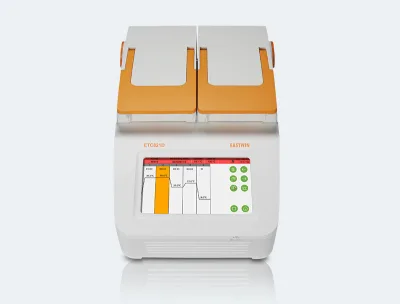
item number: 39412
€ 5.500,00
Promotional Price € 3.850,00

item number: 39580
Price on request
item number: 40686
€ 15.000,00
Promotional Price € 12.000,00
item number: 40685
€ 14.000,00
Promotional Price € 11.200,00
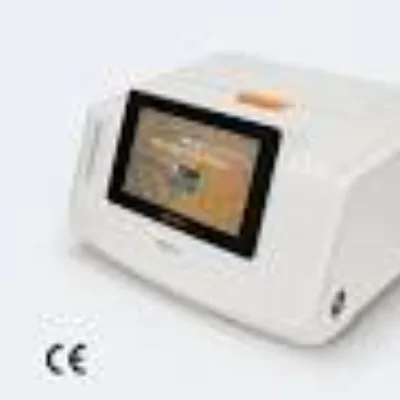
item number: 40684
€ 6.500,00
Promotional Price € 5.200,00
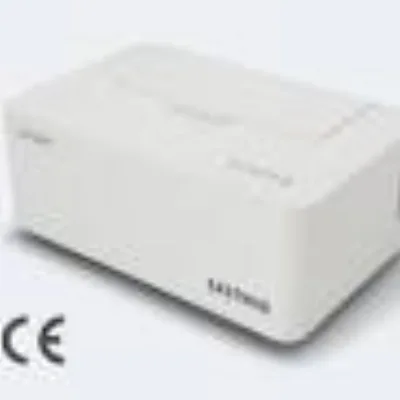
item number: 40683
€ 5.750,00
Promotional Price € 4.600,00
item number: 40682
€ 5.000,00
Promotional Price € 4.000,00
Thermal cyclers control the temperature cycles of the polymerase chain reaction (PCR): denaturation, primer annealing, and elongation are repeated in defined temperature-time profiles. Result quality depends directly on block temperature homogeneity, heating and cooling rates, and reproducibility between wells. The range is divided into two categories: gradient cyclers for classic endpoint PCR and real-time thermal cyclers (qPCR systems) for real-time quantification.
Gradient cyclers allow simultaneous testing of different annealing temperatures across the block. A temperature gradient is applied across the columns of the block, enabling the optimal annealing temperature for a primer pair to be determined in a single run. The range includes the ETC821 series (96-well, 384-well, and 2×48-well dual block) and the SensoQuest Labcycler Gradient with interchangeable blocks for 48-, 96-, 96-Alu-, and 384-well formats.
Real-time thermal cyclers detect PCR amplification in real-time via fluorescence measurement, enabling absolute or relative quantification of nucleic acids — the basis for gene expression analysis, viral load determination, SNP genotyping, and digital pathology. The eQ series offers systems with a 16-well block (eQmini-S, eQ162CP, eQ164CP — 2 to 4 channels) and a 96-well block (eQ9600-4, eQ9600-6 — 4 or 6 channels). All models run on an open reagent platform without being tied to manufacturer-specific kits.
The most important questions regarding the choice between gradient cyclers and real-time thermal cyclers, block formats, and channel counts.
A gradient cycler performs classic endpoint PCR and additionally allows the application of a temperature gradient to optimise the annealing temperature. A real-time thermal cycler (qPCR system) detects amplification via fluorescence measurement in real-time and enables the quantification of starting material — it is required for quantitative applications such as gene expression or viral load determination.
The temperature gradient is applied across the block so that different annealing temperatures can be tested in a single PCR run. This allows the optimal annealing temperature for a new primer pair to be determined efficiently without performing multiple separate runs.
“Open platform” means that the eQ systems are not tied to manufacturer-specific reagents or kits. Commercially available qPCR master mixes and dyes from various suppliers can be used — without additional costs for proprietary reagents.
For simple singleplex qPCR (one target, one reference gene), 2 channels are sufficient. For multiplex PCR with multiple targets in one reaction or for melting curve analysis, 4 to 6 channels are recommended. The eQ series offers 2-, 4-, and 6-channel systems for 16- and 96-well formats.