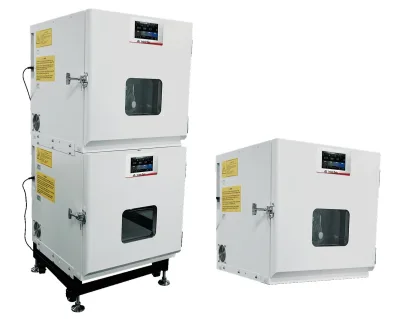
AXOTRON IS-DW Shaking Incubator with Magnetic Drive, Cooling and Touchscreen
item number: 40924
Shake stroke Ø 26 mm, speed 30 - 400 rpm, supplied standard with universal tray
€ 8.900,00
Promotional Price € 7.120,00

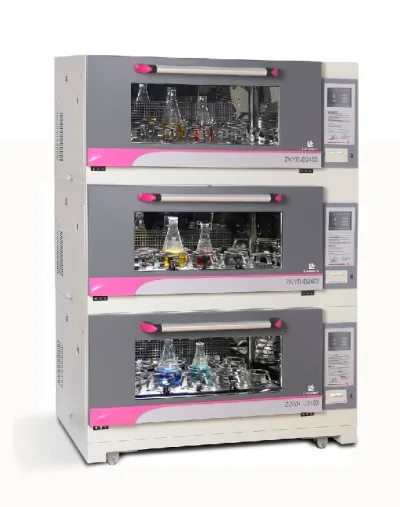
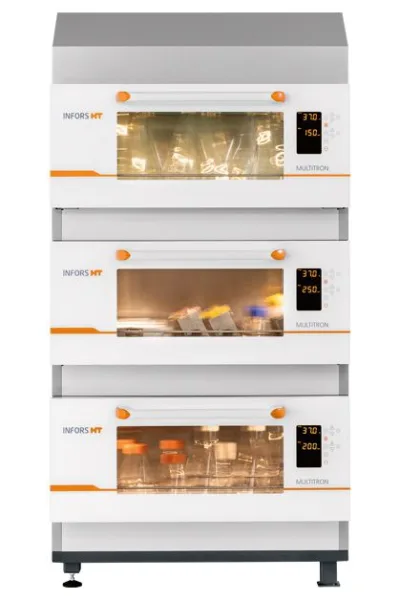
Shaking incubators combine precise temperature control with defined shaking motion for the cultivation of microorganisms, cells, and expression systems in Erlenmeyer flasks, culture tubes, and microtiter plates. The range includes configurable floor-standing units (Axotron, Zefa, Infors Multitron) as well as compact benchtop models with and without cooling—for laboratory requirements ranging from single units to stackable multi-tier solutions.
item number: 40924
€ 8.900,00
Promotional Price € 7.120,00
item number: 40825
€ 15.900,00
Promotional Price € 12.720,00
item number: 39553
List price € 13.900,00
item number: 40108
Price on request
item number: 40111
Price on request
.webp "Benchtop Shaking Incubator with Cooling IS-RDD3, Shaking Surface 450 x 400 mm | Angebot | kaufen | Kaufanfrage")
item number: 39566
List price € 5.300,00
item number: 40207
List price € 4.150,00
item number: 39565
€ 4.600,00
Promotional Price € 3.220,00
item number: 16975
List price € 6.200,00
item number: 15903
Price on request
item number: 15908
Price on request
Shaking incubators generate a uniform fluid flow in the culture vessel through orbital or linear shaking motion, which maximises oxygen transfer into the culture medium and balances concentration gradients. Temperature, rotation speed, and stroke are the primary process parameters; depending on the application, cooling, CO₂ gassing, humidity control, and growth lighting are added as further control variables.
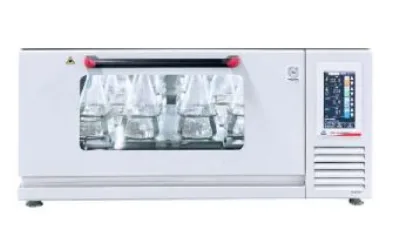
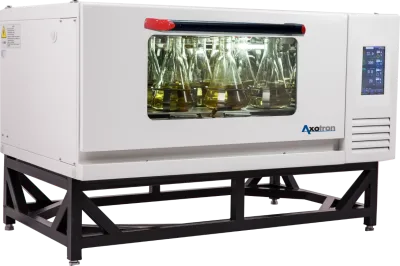
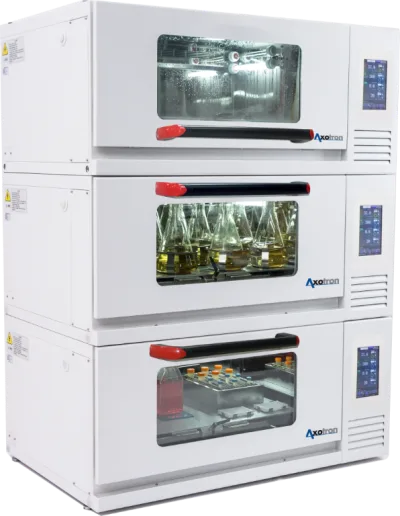
Floor-standing shaking incubators offer large usable volumes for the simultaneous operation of many culture vessels and are often stackable or modularly expandable. The range includes the Axotron shaking incubator with magnetic drive and adjustable orbit (standard with cooling and 10" touchscreen), the Zefa shaking incubator with circular shaking stroke, and the Infors Multitron—all configurable according to individual requirements.
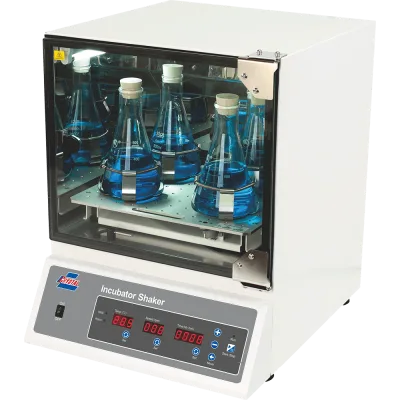
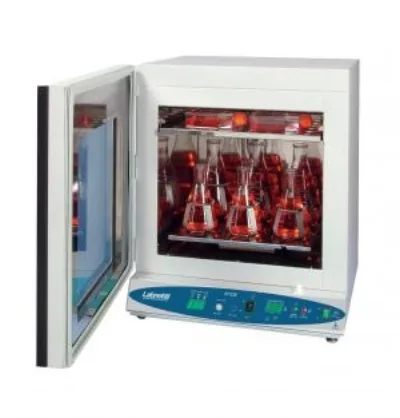
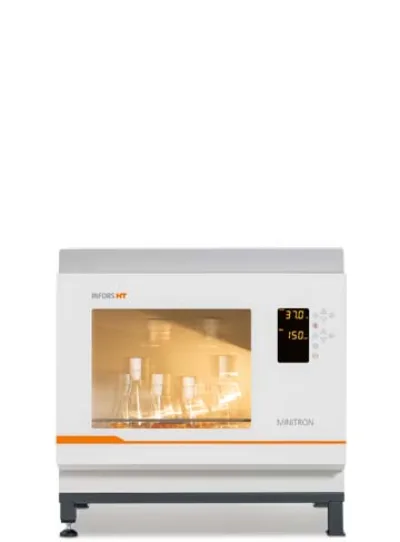
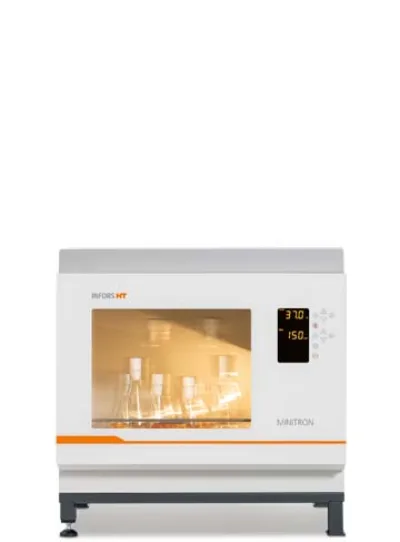
Compact benchtop units for limited space or as a supplement to floor-standing units: the Axotron IS-RDD3 with cooling (shaking area 450×400 mm, Ø 26 mm orbit, 30–400 rpm) as well as several models without cooling (Axotron IS-RSD3, IS-RSDA, Labwit 311 DS, Infors Minitron) for different capacity levels and shaking strokes.
All units are designed for operation with Erlenmeyer flasks, culture tubes, and microtiter plates. Depending on the model, vessels are secured via stainless steel spring clamps, plastic clamps, adhesive mats, or tension spring trays. Optional equipment includes CO₂ gassing, humidity control, and growth lighting for demanding cell culture applications.
The most important questions regarding the choice between floor-standing and benchtop units, cooling options, and shaking stroke and orbit.
Floor-standing units offer larger usable volumes, are often stackable, and are designed for continuous operation with many culture vessels. Benchtop units are more compact, space-saving, and suitable for smaller sample quantities or as a supplement to a central floor-standing unit.
Cooling is required if cultures are to be incubated below ambient temperature—for example, for psychrophilic organisms or if cultures are stored at low temperatures after the growth phase. Without cooling, temperatures can only be controlled above room temperature.
The orbit (shaking stroke) describes the diameter of the circular shaking motion in mm. A larger orbit generates stronger mixing and higher oxygen transfer—relevant for aerobic cultures in large flasks. Common values in the benchtop range: 19 mm, 25 mm, 26 mm, 50 mm.
The magnetic drive operates contact-free and transmits the shaking motion without a mechanical coupling—this eliminates vibrations caused by imbalances and enables particularly quiet, smooth operation. Additionally, the orbit on the Axotron IS-6MVW is continuously adjustable, which allows for the optimisation of oxygen transfer for different culture vessels.