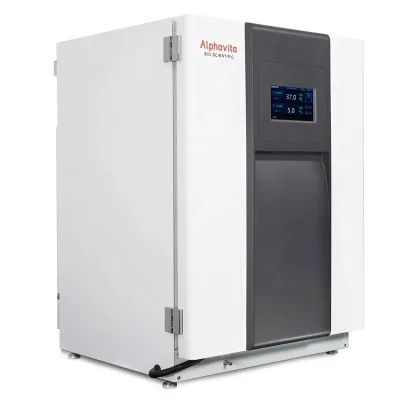
Alphavita CO₂ Incubator MCO-170HS, 170 l, UV and 180°C Sterilization, 7" Touchscreen
item number: 40339
Two sterilization modes: High-temperature sterilization at 180°C and UV sterilization
List price € 10.500,00

Haier CO₂ incubators provide controlled culture conditions for cell cultures in research, diagnostics, and biotechnology. These units are used in laboratories, clinics, and pharmaceutical companies where reproducible CO₂, temperature, and humidity conditions are required for the cultivation of cells and tissues. Haier combines various sterilisation modes with a modern user interface.
item number: 40339
List price € 10.500,00
Haier CO₂ incubators are used for the cultivation of cells that require a defined carbon dioxide atmosphere. In addition to CO₂ concentration, the units precisely regulate temperature and humidity to create optimal growth conditions for human and animal cell lines, primary cultures, or microorganisms. Typical applications are found in biotechnology, pharmaceutical research, clinical diagnostics, and academic research.
The Alphavita CO₂ incubator MCO-170HS features two independent sterilisation modes: high-temperature sterilisation at 180 °C and UV sterilisation. High-temperature sterilisation allows for thermal decontamination of the entire interior and sustainably reduces microbial growth. UV sterilisation can be used continuously or interval-controlled and is suitable for routine contamination prophylaxis between culture runs. Both methods support compliance with GMP requirements and reduce the risk of cross-contamination.
The MCO-170HS model offers a usable volume of 170 litres and is equipped with a 7-inch touchscreen. The touchscreen operation allows for intuitive parameterisation of CO₂ concentration, temperature, and humidity, as well as the programming of sterilisation cycles. The combination of sufficient volume and compact design makes the incubator suitable for medium sample quantities, such as those found in research laboratories, pharmacies, or smaller production units.
Haier CO₂ incubators are used wherever cell cultures must be grown under controlled conditions. This includes stem cell research, the production of biologics, in-vitro diagnostics, toxicological tests, and regenerative medicine. In the pharmaceutical industry, they are used for the development and testing of active ingredients; in clinics, they are used for the preparation of cell therapeutics or diagnostic procedures. They are also a central tool of cell biology in academic research.
When selecting a CO₂ incubator, volume, sterilisation method, control accuracy, and documentation capability are decisive. The volume must match the number and size of the culture vessels. Sterilisation options such as high-temperature or UV influence contamination safety. The control accuracy of CO₂, temperature, and humidity determines the reproducibility of culture conditions. For GMP-compliant applications, data loggers, alarms, and validation documentation are required. The user interface should be clear and facilitate programming and monitoring.
The following answers central questions regarding the use, selection, and operation of Haier CO₂ incubators.
Haier CO₂ incubators are used for the controlled cultivation of cells under defined CO₂, temperature, and humidity conditions. They are used in cell biology, biotechnology, pharmaceutical research, clinical diagnostics, and regenerative medicine to ensure reproducible growth conditions for human, animal, or microbial cell cultures.
The MCO-170HS model with 170 litres is suitable for medium sample quantities, such as those found in research laboratories, pharmacies, or smaller production units. The choice of volume depends on the number and size of the culture vessels. For larger throughputs or parallel test series, multiple incubators or models with higher volume may be required.
The Alphavita MCO-170HS features two sterilisation modes: high-temperature sterilisation at 180 °C for thermal decontamination of the entire interior, and UV sterilisation for continuous or interval-controlled contamination prophylaxis. Both methods complement each other and allow for flexible contamination control depending on requirements.
High-temperature sterilisation at 180 °C works by thermally killing microorganisms throughout the entire interior and is particularly thorough, though it requires temporary shutdown of operation. UV sterilisation occurs via UV radiation and can be used continuously or cyclically during operation. It is suitable for routine prophylaxis, whereas high-temperature sterilisation is preferred for stronger contamination or after user changes.
Useful accessories include additional shelves for flexible space utilisation, data loggers for continuous recording of temperature and CO₂, external alarm systems for deviations, and CO₂ sensors for precise control. For GMP-compliant applications, validation kits and calibration protocols are required. Water treatment systems for generating sterile water for humidification increase contamination safety.
A quote for Haier CO₂ incubators can be requested via specialist laboratory equipment dealers or directly from the manufacturer. Information regarding volume, sterilisation requirements, control accuracy, documentation needs, and the area of application should be provided. For GMP-compliant applications, validation and qualification services must also be clarified. Professional advice helps in selecting the appropriate model for the respective application.
A CO₂ incubator with high-temperature sterilisation requires regular calibration of the CO₂ and temperature sensors, cleaning of interior surfaces, and inspection of seals and door locks. High-temperature sterilisation itself reduces cleaning effort as it thermally eliminates contamination. Additionally, water containers for humidification should be cleaned regularly and filled with sterile water. For GMP-compliant use, documented maintenance and calibration protocols are required.