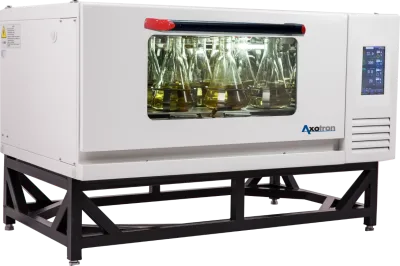
Shaking Incubator IS-6 with Cooling and Touchscreen, Large Tray 900 x 560 mm
item number: 39553
Forced air circulation temperature control, circular orbital shaking motion, Ø 26 mm, speed 30 - 300 rpm
List price € 13.900,00

Floor-standing shaking incubators with cooling (1-shelf) combine temperature control and shaking functions in a single unit for microbiological, biochemical, and cell biological applications. These units are designed as stackable models and are suitable for laboratories in research, biotechnology, diagnostics, and the pharmaceutical industry that require reproducible cultivation conditions with simultaneous cooling. With a circular shaking motion and magnetic drive, they ensure gentle mixing with precise temperature control.
item number: 39553
List price € 13.900,00
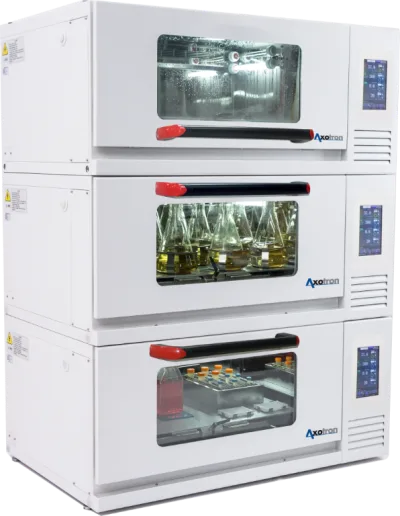
item number: 40108
Price on request
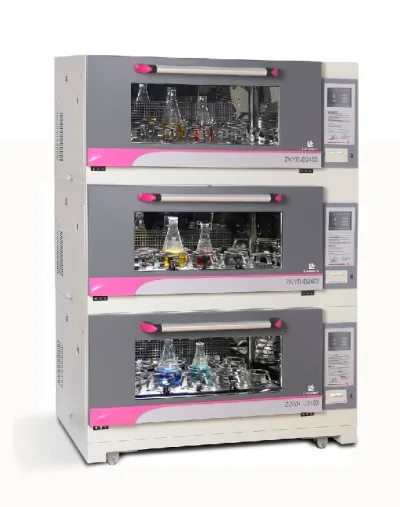
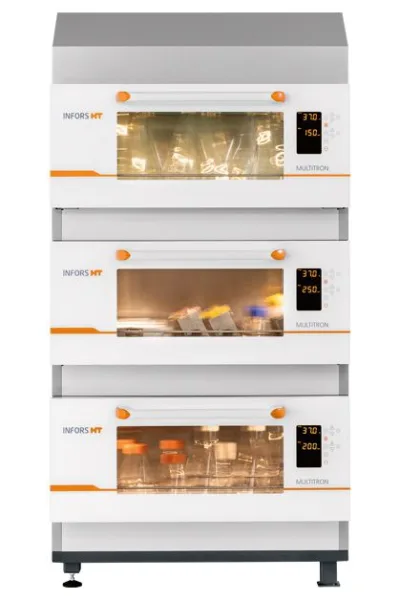
item number: 40111
Price on request
Shaking incubators with cooling as 1-shelf floor-standing units combine incubation functions with active cooling, enabling temperature-controlled shaking applications over a wide range. The units use air circulation for uniform temperature distribution in the interior and operate with a circular shaking motion to gently mix cultures. The magnetic drive ensures low-vibration, low-maintenance operation without mechanical wear parts. Typical shaking frequencies range from 30 to 300 rpm, and shaking orbits of, for example, 26 mm diameter allow for adjustable mixing intensity for different vessel sizes and culture volumes.
The stackable design of these 1-shelf floor-standing units allows multiple units to be arranged vertically, efficiently utilising laboratory floor space. Each unit has its own tray – for example, with dimensions such as 900 x 560 mm – and can be operated independently. This modularity is particularly suitable for growing laboratory environments or parallel test series with different temperature conditions. Floor-standing units with cooling, 1-shelf also offer sufficient space for Erlenmeyer flasks, culture bottles, or microtiter plates and, thanks to the cooling unit, allow work in both tempered and sub-ambient temperature ranges.
Shaking incubators with cooling are used in cell culture, fermentation, bacteria and yeast cultivation, and enzymatic reactions that require controlled temperatures below room temperature. Active cooling extends the range of applications to include cold-sensitive organisms, temperature-critical assays, or the storage of samples under shaking conditions. Diagnostic laboratories, pharmaceutical companies, and research institutions use these units for reproducible cultivation conditions with flexible temperature control. The combination of shaking function and cooling capacity is particularly important for heat-sensitive cell lines or processes with exothermic reactions.
When selecting a shaking incubator as a floor-standing unit with cooling (1-shelf), tray area, temperature range, shaking orbit, and speed range are key criteria. The units mentioned on this page offer a circular shaking motion with diameters such as 26 mm and speeds of 30 to 300 rpm, allowing for broad adaptation to various vessel types. Configurable models allow for adaptation to specific requirements such as extended temperature control, additional sensors, or interfaces for process monitoring. Air circulation ensures homogeneous conditions even with higher loads, while the magnetic drive remains low-maintenance in the long term and supports trouble-free continuous operation.
Modern shaking incubators with touchscreen control facilitate the parameterisation and monitoring of temperature, speed, and run time. Users can precisely set target values, save programmes, and configure alarms for deviations. Intuitive operation reduces training times and minimises input errors. For GMP-compliant environments, logging functions and data interfaces are important, which are optionally available in configurable models. The 1-shelf floor-standing design with cooling is designed to work stably and reproducibly even during long cultivation runs.
The following answers typical user questions about these units.
They are used for the temperature-controlled cultivation of microorganisms, cell cultures, and biochemical samples that require simultaneous mixing and cooling below room temperature. Areas of application include biotechnology, microbiology, diagnostics, and pharmaceutical research.
The choice depends on the number and size of the culture vessels. Large trays such as 900 x 560 mm offer space for many Erlenmeyer flasks or microtiter plates. For smaller batches, more compact surfaces are sufficient, provided the stackability is utilised.
The circular shaking motion ensures homogeneous mixing without strong shear forces, while the magnetic drive operates with low wear, quietly, and maintenance-free. This ensures reproducible conditions and long service life.
1-shelf floor-standing units are modular and can be operated individually or stacked, with each unit being independently temperature-controlled and shaken. Multi-shelf models integrate several shelves into one housing but require more height and are less flexibly expandable.
Tray inserts for different vessel sizes, additional sensors for CO₂ or O₂ monitoring, data loggers for GMP documentation, and special shaking attachments for microtiter plates extend functionality and facilitate quality assurance.
Manufacturers and specialist dealers offer advice on unit configuration, temperature range, shaking orbit, and optional equipment. A quote is usually prepared after clarifying specific requirements such as tray area, temperature range, and interfaces.
Uniform temperature distribution should be checked using calibrated sensors. Shaking frequency and amplitude must be verified to ensure reproducible cultivation conditions. In GMP environments, installation and operational qualification (IQ/OQ) are required.