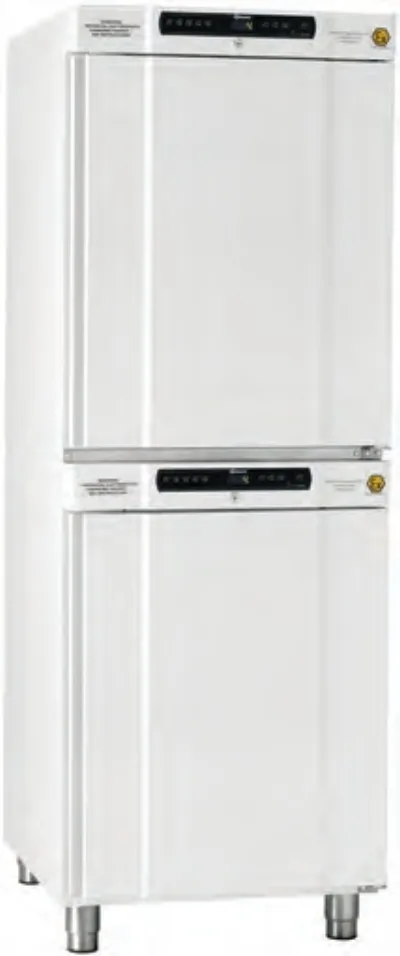
GRAM Pharmaceutical Refrigerator-Freezer Combination BioCompact II (125/125 Liters), white
item number: 15610
Top pharmaceutical refrigerator BioCompact II RR 210 according to DIN 58345, bottom freezer unit RF 210
List price € 4.860,00

Medication refrigerator combinations according to DIN 13277 combine a standards-compliant medication refrigerator with a freezer section in a single unit. This design is suitable for pharmacies, clinics, and pharmaceutical facilities that need to store both refrigerated and frozen medicines. The combination saves floor space and allows for temperature-separated storage within one housing.
item number: 15610
List price € 4.860,00
In combination units, the refrigerator and freezer sections are arranged one above the other. They feature separate doors and independent temperature control, allowing for separate access to both areas. This design saves valuable floor space compared to two separate individual units.
The upper refrigerator section must meet the requirements of DIN 13277 to ensure the storage of medicines in accordance with pharmaceutical law. Key features of this standard include temperature homogeneity, specific alarm functions, and the documentation capability of temperature values in the range of +2 °C to +8 °C.
This device class is used in public pharmacies, hospital pharmacies, and medical practices for vaccine storage. Smaller pharmaceutical companies also use the space-saving combination to safely store both refrigerated and deep-freeze preparations in one housing.
An overview of the most important information regarding the selection, standards, and operation of medication refrigerator combinations.
They are used for the simultaneous storage of refrigerated medicines (+2 °C to +8 °C) and frozen preparations in one unit, ideal for facilities with limited space.
Combinations with smaller volumes, such as 125 litres in the refrigerator and freezer sections, are suitable for medium quantities; for very large stocks, individual units are often more advantageous.
The standard prescribes requirements such as uniform temperature distribution, visual and acoustic alarms, and the possibility of temperature documentation.
Combination units use a shared footprint for two climate zones, while individual units offer more usable volume per zone and are more flexible to position.
For seamless documentation, external temperature monitoring systems with data loggers as well as additional shelves for better organisation in the interior are recommended.
Professional customers can submit an enquiry with details on the desired usable volume, the required standards, and the place of use for professional advice.
Due to the components arranged one above the other, the footprint in the laboratory or pharmacy is significantly reduced compared to two separate devices.