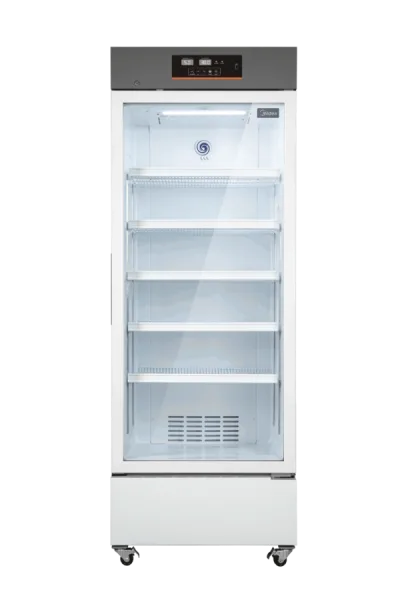
MIDEA Laboratory and Pharmaceutical Refrigerator 2°C - 8°C MC-5L316, 316 l
item number: 40195
With glass door and dual LED display, temperature and humidity
Price on request

Medication refrigerators ensure the temperature-stable storage of sensitive preparations within a range of 2 °C to 8 °C. These specialised cooling units are used in pharmacies, clinics, medical practices and pharmaceutical facilities to maintain the efficacy of medicines and vaccines. The range includes compact under-bench units as well as large-volume freestanding units with glass doors and forced-air cooling.
item number: 40195
Price on request
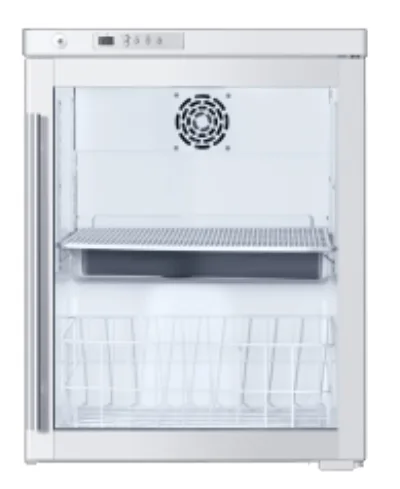
item number: 17944
List price € 969,00
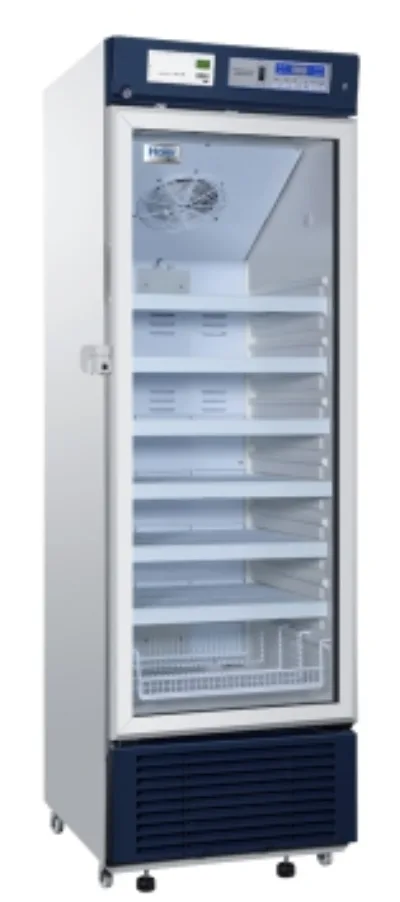
item number: 17946
€ 2.400,00
Promotional Price € 1.440,00
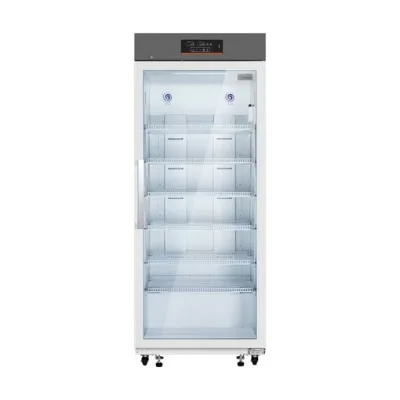
item number: 40287
List price € 3.300,00
In pharmaceutical storage, maintaining precise temperature ranges is essential. Compared to conventional cooling units, a medication refrigerator offers more precise control and uniform temperature distribution through forced-air cooling. This prevents temperature fluctuations that could compromise the stability of biological substances.
The selection is primarily between units compliant with DIN 13277 and standard models without this specific standard. The DIN standard defines strict requirements for operational safety, such as acoustic and visual alarms for temperature deviations, a safety thermostat to prevent freezing, and power failure alerts. For pharmacies, the use of medication refrigerators compliant with DIN 13277 is often mandatory.
Units from manufacturers such as Haier or Midea feature digital displays for monitoring temperature and, in some cases, humidity. Many models are equipped with a glass door, allowing for visual inspection of inventory without opening the door and risking cold loss. The interior design varies from plastic-coated wire shelves to pull-out shelves for organised storage.
The spectrum ranges from compact under-bench units with a volume of approx. 68 litres to large freestanding units with a capacity of over 600 litres. While smaller units are ideal for medical practices with limited space, clinics and pharmaceutical wholesalers use models with volumes of 500 litres or more to safely cool large batches.
Here you will find answers to important questions regarding the selection and operation of cooling units for medical preparations.
These units are used for the refrigerated storage of vaccines, insulin and other medicines that must be kept at temperatures between 2 °C and 8 °C to prevent loss of efficacy.
The volume depends on the quantity of preparations to be stored. Under-bench units up to 100 litres are suitable for small practices, while pharmacies and laboratories usually use freestanding units from 300 litres upwards.
DIN 13277 is the authoritative standard in Germany. It sets requirements for storage temperature, alarm devices, the mechanical strength of internal components and lockability.
Units compliant with DIN 13277 feature additional safety equipment such as frost protection against temperatures below +2 °C and mains-independent alarm systems in the event of a power failure, which standard models do not necessarily possess.
Integrated dual LED displays show actual values. Additionally, external data loggers or monitoring systems can be used to seamlessly document the cold chain.
Interested parties can submit a specific price enquiry for each model via the request quote button to receive a written offer for their procurement planning.
Thanks to smooth interior surfaces and removable shelves, the units are easy to disinfect. Forced-air cooling also reduces ice formation in the interior, which minimises maintenance requirements.