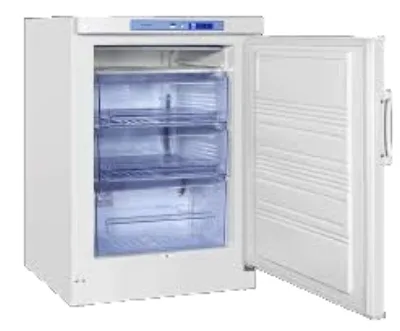
HAIER -25°C Laboratory Freezer 92 l Capacity DW-25L92
item number: 18447
Includes 3 transparent plastic drawers
In stock
€ 1.100,00
Promotional Price € 715,00

Laboratory freezers with 125 l volume in undercounter design offer a space-saving solution for storing temperature-sensitive samples, reagents and biological materials at temperatures down to -25°C. These compact units are particularly suitable for laboratories, pharmacies, clinics and research facilities with limited space. The undercounter construction allows the freezers to be flexibly integrated under work surfaces and optimizes the use of available laboratory space.
item number: 18447
€ 1.100,00
Promotional Price € 715,00
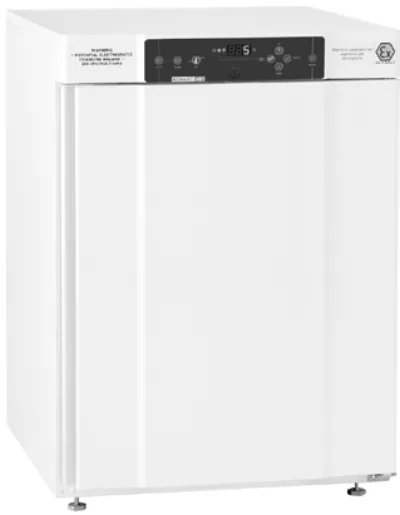
item number: 17460
List price € 1.775,00
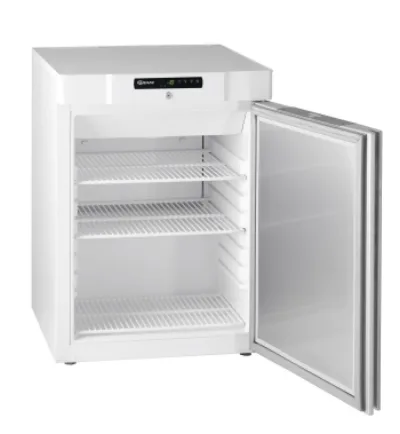
item number: 15485
List price € 2.320,00
item number: 15484
List price € 2.430,00
Laboratory freezers with 125 l usable volume in undercounter design combine compact dimensions with reliable cooling technology for professional laboratory use. The temperature range from -5°C to -25°C enables safe storage of samples, reagents, diagnostics and biological materials. The undercounter design allows integration under laboratory benches and work surfaces, saving valuable floor space in the laboratory.
The units in this category feature forced air technology, which ensures uniform temperature distribution in the interior. Models with transparent plastic drawers facilitate overview and access to stored material. Depending on the version, variants with white exterior coating or stainless steel housing are available to meet different hygienic and aesthetic requirements in the laboratory.
The offered laboratory freezers with 125 l volume differ in equipment and control technology. Simpler models offer basic cooling functions with transparent drawers for clear storage. Advanced versions feature more comprehensive control options that enable more precise temperature regulation and monitoring. The forced air function ensures stable temperature conditions in all variants even at room temperatures up to 35°C.
The volume from 92 l to 125 l offers sufficient capacity for small to medium sample quantities. The undercounter construction enables ergonomic placement at working height and improves accessibility compared to floor-standing large units. Various manufacturers offer models with different price-performance ratios, so that suitable solutions are available for different budgets and requirement profiles.
Undercounter laboratory freezers are used in analytical laboratories, quality control, clinical diagnostics, pharmacies and research facilities. They are suitable for storing enzyme preparations, antibodies, cell culture media, buffer solutions and diagnostic reagents that remain stable at temperatures around -25°C. In pharmacies they are used for stocking temperature-sensitive medicines, while in research they serve for intermediate storage of samples before further processing.
The compact design makes these units particularly attractive for workplaces with multiple users where short distances and quick access to cooled material are required. In combination with data loggers or alarm systems, the laboratory freezers can be integrated into monitored storage systems that meet the requirements for documentation and quality assurance in regulated areas.
When selecting a laboratory freezer with 125 l volume, in addition to the usable volume, the required temperature range, the room temperature at the installation location and the desired equipment should also be considered. Units with advanced control offer additional functions for temperature monitoring and alarming, which are advantageous in quality-critical applications. The choice between white coating and stainless steel housing depends on hygienic requirements and the laboratory environment.
The forced air function is particularly important for homogeneous temperature distribution when different sample materials are stored together. The undercounter design requires sufficient ventilation space at the sides and rear of the unit to ensure efficient heat dissipation. Energy efficiency and noise development can also play a role in the decision, especially in laboratories with continuous staff operation.
The following answers typical questions about undercounter laboratory freezers with 125 l volume that frequently arise when selecting and operating these units.
These units are suitable for storing samples, reagents, enzymes, antibodies, diagnostics and temperature-sensitive medicines at temperatures down to -25°C. They are used in analytical laboratories, pharmacies, clinics and research facilities where space-saving solutions with quick access are required.
Undercounter means that the unit is designed so that it can be installed under a work surface or laboratory bench. The design enables ergonomic integration at working height and saves valuable floor space in the laboratory. Sufficient ventilation space must be planned for heat dissipation.
The offered models cover a temperature range from -5°C to -25°C, with performance guaranteed at room temperatures up to 35°C. This range is suitable for many standard applications in sample storage, but is not sufficient for deep-frozen biological samples that require -40°C or colder.
The models differ in usable volume (92 l to 125 l), equipment, control technology and housing material. Simpler variants offer basic cooling functions with transparent drawers, while advanced versions feature more comprehensive control options. In addition, units with white exterior coating or stainless steel housing are available.
Yes, many models can be combined with external data loggers or alarm systems to continuously monitor the temperature and alarm in case of deviations. Units with advanced control offer additional functions for internal temperature regulation and monitoring, which are advantageous in quality-critical areas.
Forced air technology ensures uniform distribution of cold air in the interior and prevents temperature zones. This is particularly important when different sample materials are stored together and a homogeneous temperature throughout the usable volume is required. In addition, temperature stability is restored more quickly after opening the door.
Consider the required usable volume, the necessary temperature range, the room temperature at the installation location and the desired equipment. Check whether advanced control functions, data logging or special housing materials are required. Ensure sufficient ventilation space when installing under work surfaces and clarify whether the unit should be integrated into existing monitoring systems.