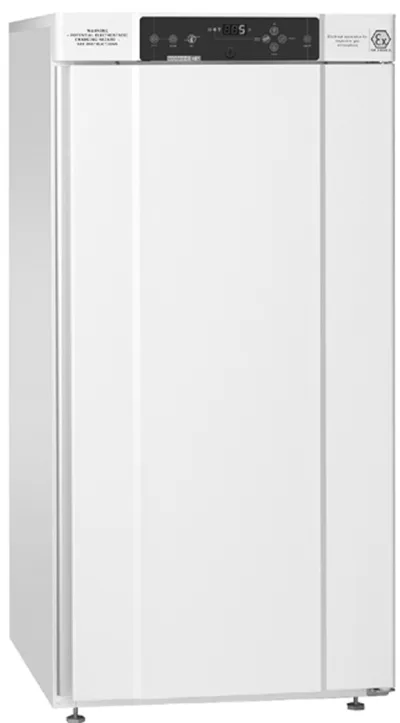
GRAM Forced-Air Laboratory Ultra-Low Temperature Freezer BioBasic RF 310 L (218 Liters)
item number: 17461
Temperature range: -5°C to -25°C (at 35°C ambient temperature)
List price € 1.945,00

Laboratory freezers up to 400 l with a temperature range of -5°C to -25°C are suitable for the safe storage of temperature-sensitive samples, reagents and biological materials in laboratories, clinics, pharmacies and research facilities. Devices in this volume class offer sufficient capacity for medium storage quantities and are available as forced-air freezers with various equipment variants. Professional customers from diagnostics, biotechnology and pharmaceutical companies will find solutions here for temperature-controlled storage at room temperatures up to 35°C.
item number: 17461
List price € 1.945,00
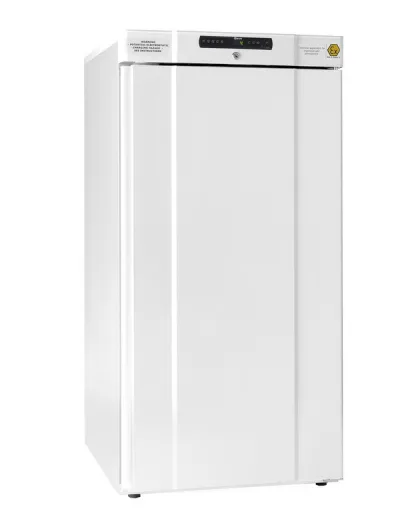
item number: 15487
List price € 2.485,00
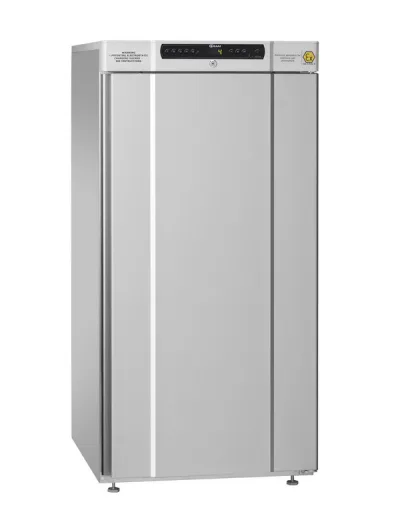
item number: 15486
List price € 2.595,00
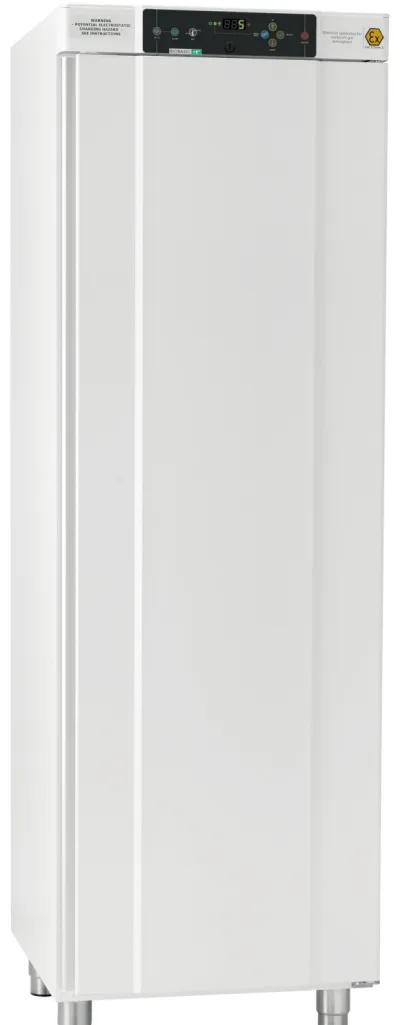
item number: 17459
List price € 2.105,00
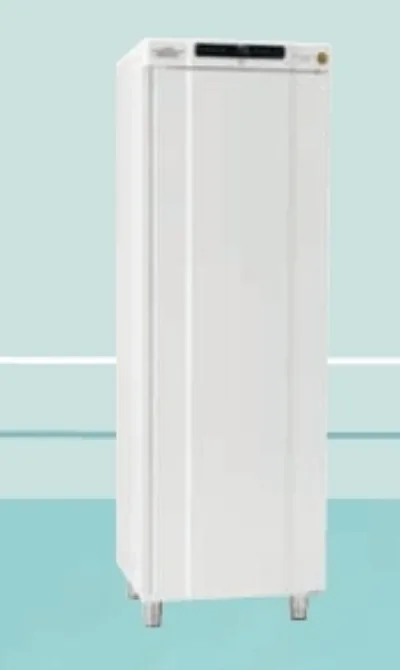
item number: 15489
List price € 2.650,00
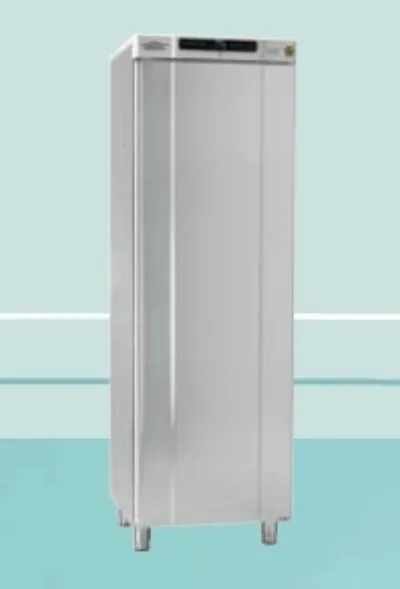
item number: 15488
List price € 2.760,00
Laboratory freezers up to 400 l cover the need for freezing capacity for laboratories that require more volume than compact undercounter units but do not yet wish to use large-volume cabinet solutions. With net volumes from 218 litres to 346 litres, these devices offer space for extensive sample collections, reagents, enzymes, antibodies and biological materials. The temperature range of -5°C to -25°C enables the storage of many common laboratory substances that do not require ultra-low temperatures.
The forced-air freezers offered in this category ensure uniform temperature distribution in the interior through air circulation. This is particularly important for the reproducible storage of temperature-sensitive materials. All devices are designed for operation at room temperatures up to 35°C, which enables use even in warmer laboratory environments or rooms without air conditioning.
The laboratory freezers up to 400 l are available in different versions. Models with 218 litres net volume offer a compact footprint, while devices with 346 litres provide more storage capacity on a vertical level. Depending on the model series, cabinet variants in white or stainless steel are available, with stainless steel versions being particularly preferred in cleanroom environments or GMP-regulated areas.
The devices are mounted either on height-adjustable stainless steel feet or on castors with 125 mm diameter. Castors facilitate positioning and cleaning, while fixed feet are suitable for stationary installations. Differences also exist in control technology: basic models offer standard functions, while variants with advanced control provide additional monitoring and documentation options.
When selecting a laboratory freezer up to 400 l, the required net volume must first be determined. For smaller sample quantities or limited floor space, models with 218 litres are suitable, while larger collections or growing inventories require devices with 346 litres. The temperature range of -5°C to -25°C must correspond to the requirements of the materials to be stored. For lower temperatures, specialized deep-freeze cabinets with -30°C, -40°C or -50°C are required.
The choice between basic and advanced control variants depends on documentation and validation requirements. Advanced controls often offer more precise temperature regulation, extended alarm functions and interfaces for data loggers. The cabinet design depends on hygienic requirements and the laboratory environment: stainless steel cabinets are easier to clean and more resistant to disinfectants than painted surfaces.
Laboratory freezers up to 400 l are used in diverse areas. In clinical diagnostics they serve for the storage of serum samples, plasma samples and diagnostic reagents. Research laboratories use them for enzymes, antibodies, cell culture media and molecular biology reagents. In pharmacies and pharmaceutical operations they are used for temperature-sensitive active substances, vaccines and reference substances.
Biotechnology companies use these devices for the storage of expression vectors, protein solutions and biological samples. Quality control laboratories use them for storing reference materials and retention samples. The volume class up to 400 litres is particularly suitable for medium-sized laboratories or as a supplement to existing cooling and freezing capacities.
The forced-air technology in these laboratory freezers ensures active air circulation in the interior. This minimizes temperature gradients and achieves homogeneous temperature distribution across all storage areas. This is crucial for the reproducibility of storage conditions and the integrity of temperature-sensitive samples. Compared to static cooling systems, forced air enables faster temperature recovery after door openings.
The design for room temperatures up to 35°C ensures reliable operation even under unfavourable ambient conditions. This is particularly relevant in laboratories without continuous air conditioning or during summer months. The devices are constructed so that they can maintain the specified temperature range of -5°C to -25°C even at maximum ambient temperature.
The following answers typical questions that arise when selecting and operating laboratory freezers up to 400 l.
These devices are suitable for the storage of serum samples, plasma samples, reagents, enzymes, antibodies, cell culture media and many biological materials that do not require ultra-low temperatures below -25°C. They are used in clinical laboratories, research facilities, pharmacies and biotechnology operations.
The choice depends on the sample quantity and available floor space. Models with 218 litres are suitable for smaller to medium sample collections and require less floor area. Devices with 346 litres offer more capacity for growing inventories or more extensive storage quantities with similar floor space through greater height.
Basic models offer standard functions for temperature regulation and basic alarming. Variants with advanced control have more precise regulation, additional monitoring functions, extended alarm options and often interfaces for data loggers or external monitoring systems, which is relevant for documentation-required areas.
Forced-air freezers ensure uniform temperature distribution throughout the interior through active air circulation. This minimizes temperature fluctuations between different storage positions, enables faster temperature recovery after door openings and improves the reproducibility of storage conditions for temperature-sensitive samples.
Stainless steel cabinets are not mandatory but offer advantages in cleanroom environments, GMP-regulated areas or laboratories with high hygiene requirements. They are more resistant to disinfectants, easier to clean and more visually appealing. White painted finishes are more cost-effective and sufficient for many standard applications.
For temperature monitoring and documentation, USB data loggers or WLAN data loggers are recommended. Systems for alarm forwarding inform about temperature deviations or malfunctions even outside working hours. The selection depends on validation and documentation requirements as well as the desired networking.
Castors with 125 mm diameter facilitate positioning, relocation and cleaning under the device, which is advantageous in flexible laboratory environments or with frequent reorganization. Height-adjustable stainless steel feet offer stable standing for stationary installations and are sufficient if the device remains permanently in one location.