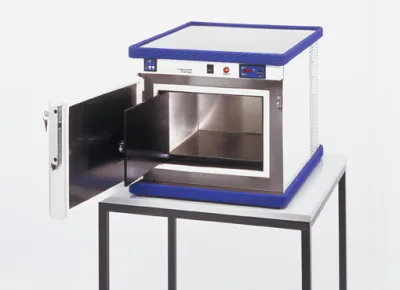
Ultra-Low Freezer Box Type B 3020, 30 Liters, -20°C to +10°C
item number: 15263
Benchtop unit with exceptionally low-noise refrigeration unit.
List price € 2.910,00

Laboratory freezers with temperature ranges from -30°C to -50°C bridge the gap between standard freezers and ultra-low temperature freezers, making them suitable for samples, vaccines, and reagents with specific storage temperature requirements. The range includes chest freezers from 30 litres, upright units up to 660 litres, and under-bench models, some featuring integrated data loggers and colour touchscreens.
item number: 15263
List price € 2.910,00
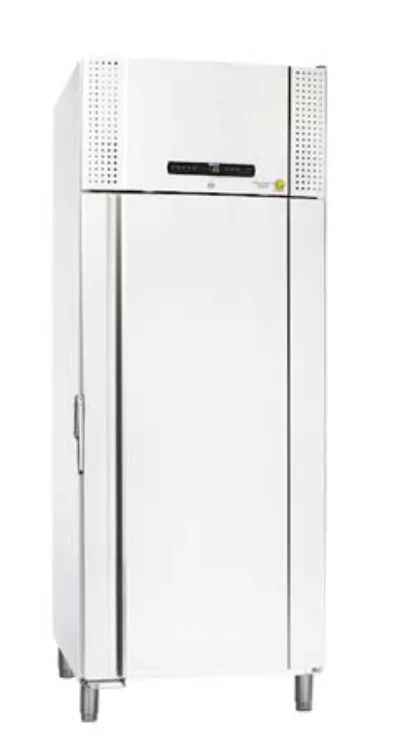
item number: 15377
List price € 7.210,00
item number: 15379
List price € 7.360,00
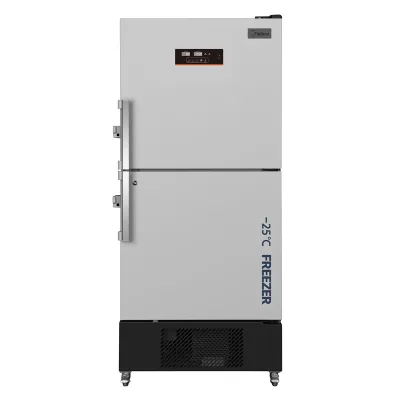
item number: 40387
List price € 4.700,00
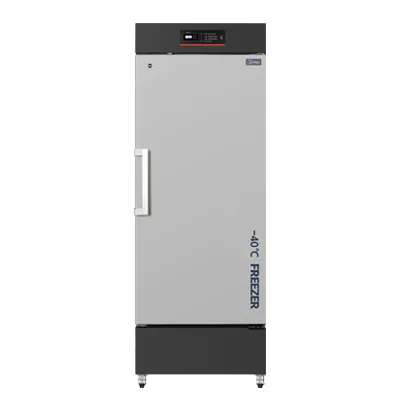
item number: 40325
List price € 3.200,00
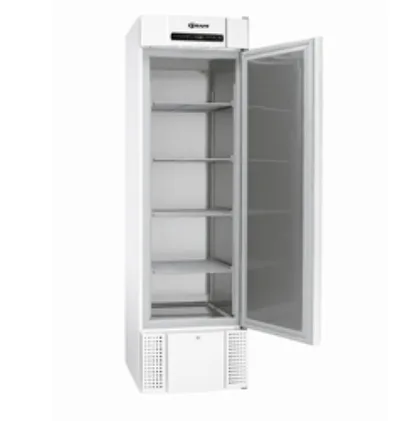
item number: 15340
List price € 5.485,00
item number: 15339
List price € 5.985,00
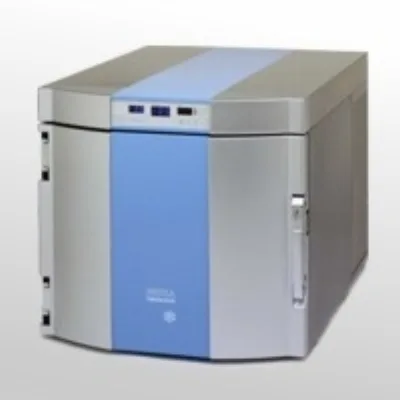
item number: 15264
List price € 4.540,00
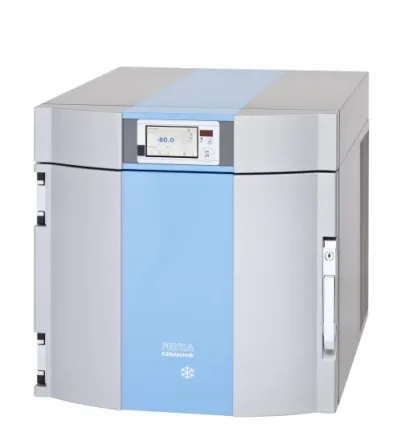
item number: 15265
List price € 5.440,00
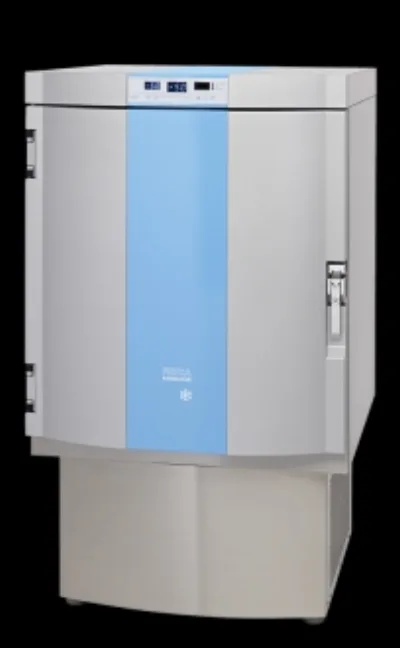
item number: 15278
List price € 7.865,00
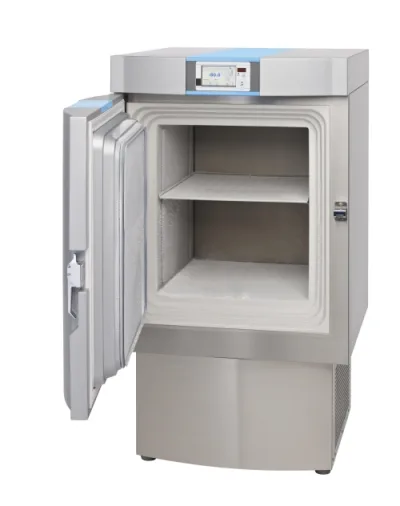
item number: 15279
List price € 8.650,00
item number: 15293
List price € 7.825,00
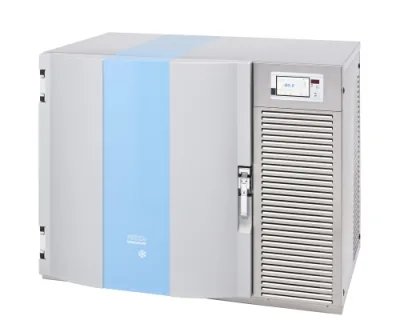
item number: 15294
List price € 8.650,00
Laboratory freezers with temperature ranges down to -30°C, -35°C, -40°C or -50°C are used in research facilities, diagnostic laboratories, biobanks and pharmaceutical operations for long-term storage of temperature-sensitive samples. The selection of the appropriate unit depends on the required storage temperatures, the needed usable volume and the specific requirements for documentation and monitoring.
The offered deep freezers cover different temperature ranges: from -20°C to +10°C, -20°C to -40°C, and -10°C to -50°C. Units with -35°C are suitable for applications requiring deeper cooling than standard freezers. -40°C deep freezers offer extended storage options for sensitive biological materials. Models with -50°C enable storage of particularly critical samples that require extremely low temperatures.
The range includes laboratory freezers with usable volumes from 30 litres to 660 litres. Compact benchtop units with 30 or 35 litres are suitable for smaller sample quantities and laboratories with limited space. Medium-sized units with 100 litres are available in undercounter design and are characterized by particularly compact and space-saving construction. Freestanding units with 308, 425, 518, 600 or 660 litres offer larger storage capacities for extensive sample collections.
Several forced-air deep freezers feature stainless steel interiors and stand on 4 castors, which supports mobility and ease of cleaning. Some models offer variable interior equipment for flexible adaptation to different stored goods. Units with min-max memory, product protection program and remote alarm connection enable extended monitoring and security. Versions with integrated data logger and colour touchscreen offer display of temperature history and user-friendly menu structure.
One benchtop unit is equipped with a particularly low-noise cooling unit, which facilitates use in noise-sensitive environments. Several models operate with natural refrigerants, which meets ecological requirements. A double-door unit with 518 litres enables separate temperature zones or facilitates access to different storage areas. Units with digital display and recorder output support continuous temperature recording.
Certain -50°C deep freezers with 100 litres usable volume are designed to accommodate a maximum of 81 cryoboxes (52 mm high). This specification enables systematic organization of samples in standardized storage systems. The design for cryoboxes facilitates inventory management and quick access to individual samples while minimizing opening time.
The power consumption varies depending on model and temperature range. A -40°C deep freezer with 308 litres has a power consumption of 2.4 kWh/day. When selecting a laboratory freezer, operating costs should be considered in addition to acquisition costs, as deep-freeze units operate continuously and energy consumption represents a significant cost factor.
The choice of suitable laboratory freezer depends on several factors: required minimum temperature, needed storage volume, available installation space, requirements for documentation and alarming, and the type of stored goods. For storage of enzymes, antibodies or certain chemical substances, different temperature ranges may be required. The decision between freestanding unit, benchtop unit or undercounter version depends on the spatial conditions and workplace design.
Below you will find answers to frequently asked questions about the selection and operation of laboratory freezers with temperature ranges down to -50°C.
Laboratory freezers with temperature ranges down to -40°C or -50°C are used in research, diagnostics, biobanks and pharmaceutical laboratories for long-term storage of temperature-sensitive samples such as biological materials, enzymes, antibodies or chemical substances that require extremely low temperatures to maintain stability.
The choice of temperature range depends on the type of stored goods. While some samples are sufficiently stable at -30°C or -35°C, other biological materials require temperatures of -40°C or -50°C. The specific storage requirements should be determined based on the manufacturer specifications of the samples or established laboratory protocols.
Units with integrated data logger enable continuous recording and display of temperature history. Models with colour touchscreen offer a user-friendly menu structure and facilitate documentation, which is particularly important in regulated areas or for quality-critical applications.
Undercounter deep freezers are characterized by particularly compact and space-saving construction and can be installed under laboratory benches or work surfaces. Freestanding units typically offer larger usable volumes and stand independently, sometimes on castors for increased mobility.
Certain -50°C deep freezers with 100 litres usable volume are designed for a maximum of 81 cryoboxes (52 mm high). This capacity enables systematic organization and quick access to samples with minimal opening time of the unit.
Several models operate with natural refrigerants, which meets ecological requirements and environmental protection guidelines. Natural refrigerants have a lower global warming potential and contribute to the sustainability of laboratory operations.
For selecting the suitable laboratory freezer, the specific requirements for temperature range, volume, documentation, alarming and spatial integration should be considered. Expert consultation can help identify the optimal unit for individual requirements.