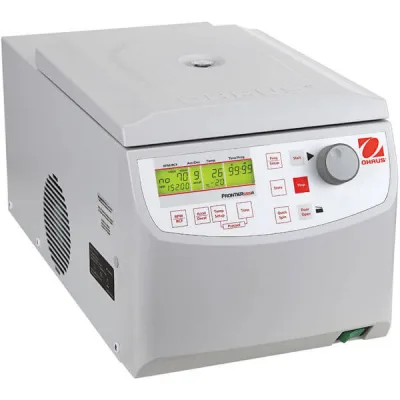
Frontier™ 5000 Micro FC5515R Refrigerated, with Rotor 24 x 1.5/2.0 ml BIOSEALS
item number: 39595
max. 15,200 rpm / 21,953 x g
List price € 5.845,00

Refrigerated microliter centrifuges are laboratory devices used for centrifuging small sample volumes under controlled temperature conditions. They are used wherever temperature-sensitive samples such as nucleic acids, proteins, or cell components need to be protected from heating during the centrifugation process. This equipment class is used in molecular biology, biochemistry, and clinical laboratories.
item number: 39595
List price € 5.845,00
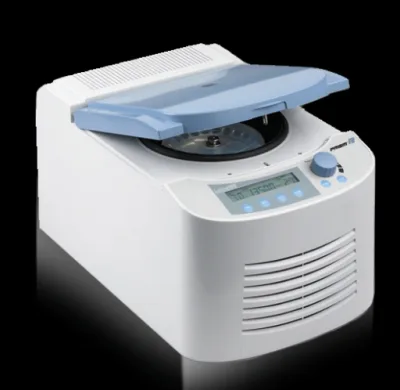
item number: 16056
Price on request
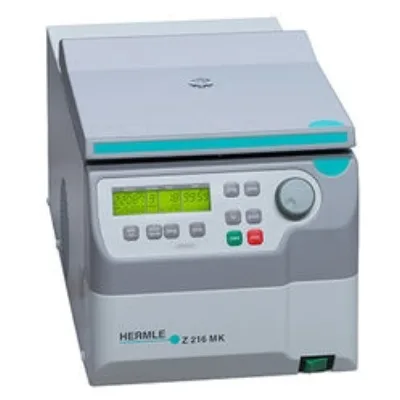
item number: 16996
Price on request
item number: 17064
Price on request
Refrigerated microliter centrifuges are used when samples need to be protected from thermal stress during centrifugation. This particularly applies to temperature-sensitive substances that could lose quality at room temperature or due to frictional heat in the rotor. Typical fields of application are found in molecular biology, biochemistry, and clinical diagnostics.
These centrifuges combine a cooling unit with a rotor for small sample vessels, usually in the microliter range. The cooling function keeps the internal temperature at a defined level during the centrifugation process. Further information on related cooling systems can be found in the Cooling Technology section.
When selecting a refrigerated microliter centrifuge, factors such as sample volume, desired temperature range, and number of rotors play a role. Since the specific equipment varies depending on the model, it is advisable to review the technical data of the respective device to check its suitability for the intended application.
It is used to centrifuge small sample volumes at a controlled temperature, thereby protecting temperature-sensitive samples during the separation process.
These are often molecular biology or biochemical samples, such as nucleic acids or proteins, which can be sensitive to temperature fluctuations.
The main difference lies in the additional cooling function, which serves to keep the sample temperature stable during centrifugation.
They are used, among other things, in molecular biology, biochemical, and clinical laboratories where temperature-sensitive sample processing is required.
Relevant criteria include the required sample volume, the necessary temperature range, and the rotor capacities available for the respective model.
No, the rotor equipment can vary depending on the model. Exact information on rotors and capacities can be found in the technical data of the respective product.
Additional information on related cooling solutions is summarized in the Cooling Technology section.