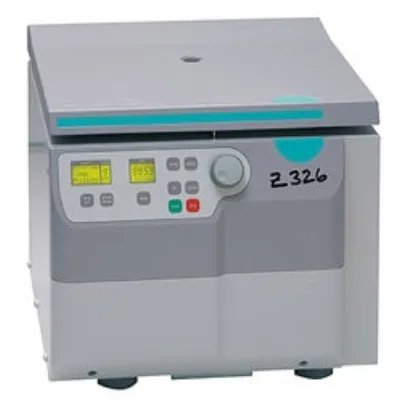
High-Speed Benchtop Centrifuge Z 326, max. capacity 4 x 100 ml, uncooled
item number: 17096
max. speed: 18,000 rpm max. RCF: 23,545 xg - without rotor
Price on request

High-speed centrifuges, non-refrigerated, form a distinct equipment category within laboratory technology for separating samples by centrifugal force. They are used when high rotational speeds are required but active cooling of the sample during the run is not necessary. The devices grouped in this category differ in design, rotor compatibility, and capacity depending on the model and manufacturer.
item number: 17096
Price on request
High-speed centrifuges, non-refrigerated, refer to laboratory centrifuges designed for high rotational speeds that operate without an integrated cooling system. They are suitable for applications in which sample temperature does not play a critical role during the centrifugation process or remains sufficiently stable due to the short run time.
The devices in this category differ in design, available rotor types, and capacity depending on the specific model. Relevant selection criteria include, among others, the maximum rotational speed, rotor compatibility, and the sample volume to be processed in the respective field of application.
High-speed centrifuges, non-refrigerated, are used in laboratories of various disciplines where sample separation by centrifugal force is required without the simultaneous need for temperature control. The specific suitability of a device always depends on its technical specifications and intended purpose.
When selecting a suitable high-speed centrifuge, capacity, rotor type, maximum rotational speed, and compatibility with existing accessories should be taken into account. Careful review of the manufacturer's specifications for the respective models is recommended for choosing the appropriate device.
Non-refrigerated means that the device has no integrated cooling system to actively regulate sample temperature during the centrifugation run.
Suitability depends on the respective model and its technical data. Generally, they are used where active temperature control during centrifugation is not required.
The devices differ in, among other things, design, maximum rotational speed, rotor compatibility, and capacity, depending on the respective manufacturer and model.
The rotor type determines which sample vessels and volumes can be processed and is therefore a key selection criterion within this category.
No, the specific suitability depends on the technical specifications of the respective model and must be verified based on the manufacturer's information.
Users should observe the operating instructions and the technical specifications of the respective device regarding rotational speed, rotor, and sample volume to ensure proper operation.
Selection is based on individual laboratory requirements, particularly regarding capacity, rotor type, and maximum rotational speed, taking into account the respective manufacturer specifications.