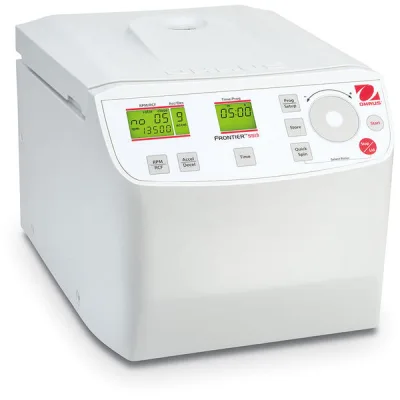
Frontier™ 5000 Micro Series FC5513, including hematocrit rotor for 24 × capillaries
item number: 39610
Max. speed 13,000 min⁻¹ - max. RCF: 16,058 × g
€ 2.115,00
Promotional Price € 1.797,75

Hematocrit centrifuges are specialized laboratory centrifuges used to determine the hematocrit value in blood. They are used in medical laboratories, clinics, and research facilities to separate blood samples using centrifugal force. In this category, you will find an overview of available devices for this application area.
item number: 39610
€ 2.115,00
Promotional Price € 1.797,75
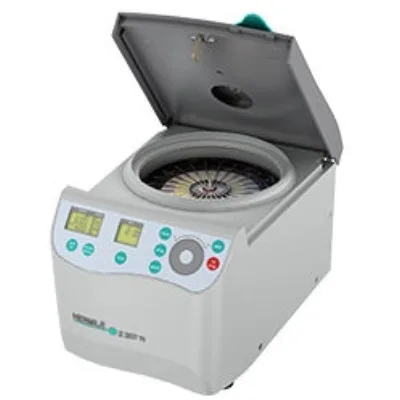
item number: 31524
Price on request
Hematocrit centrifuges are used to separate blood components in order to determine the hematocrit value, an important parameter in blood testing. This class of devices is typically used in medical laboratories, doctors' offices, and blood banks, where reliable sample preparation is required.
The use of hematocrit centrifuges extends across clinical diagnostics, research laboratories, and veterinary medical facilities. Depending on the requirements of the respective laboratory, different device variants may be considered, which can differ in equipment and functional scope.
When selecting a suitable hematocrit centrifuge, laboratory managers should pay attention to the specific requirements of their application area. Further information on complementary laboratory equipment can also be found in the Refrigeration Technology section, if temperature-controlled storage of samples is required.
A hematocrit centrifuge is a laboratory device used to separate blood components by means of centrifugal force, which is used to determine the hematocrit value.
The hematocrit value provides information about the proportion of cellular components in the blood and is a parameter used in clinical diagnostics.
These devices are used, among other places, in medical laboratories, doctors' offices, blood banks, and research facilities.
Yes, depending on the model and manufacturer, equipment features and functional scope can differ.
Hematocrit centrifuges are also used in veterinary medical laboratories, where blood samples from animals are examined.
Laboratory managers should base their selection on the specific requirements of their respective application area.
Depending on the application, temperature-controlled storage of samples may be required, for which appropriate refrigeration technology can be used.