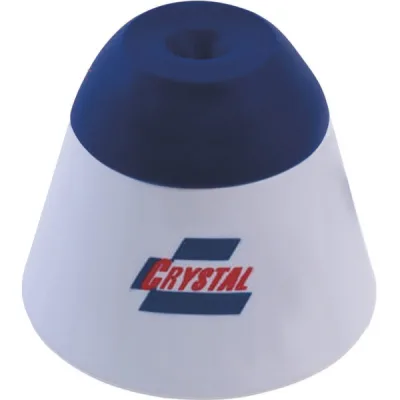

Laboratory Shakers Vortex Mixers
Vortex mixers are essential tools in biotechnology and diagnostics for the rapid homogenisation of liquids in small vessels. The available vortex mixers cover speed ranges up to 3000 RPM and offer flexible operating modes such as the press-to-mix function. Professionals in research laboratories benefit from robust analogue devices as well as precise digital models for reproducible mixing processes.
Laboratory Shakers / Vortex Mixers
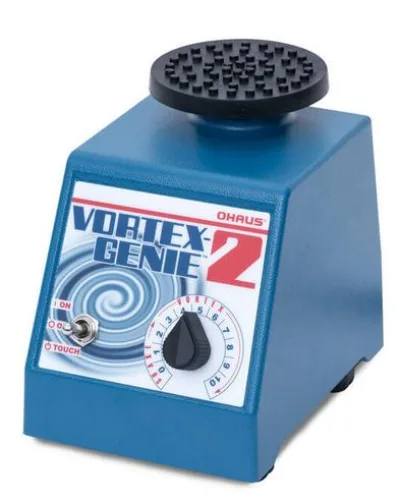
Vortex-Genie 2, analog
item number: 40162
Analog vortex mixer with touch/touchless control, timer, and cold room compatibility.
List price € 395,00
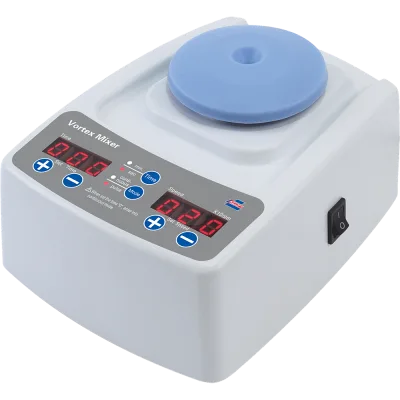
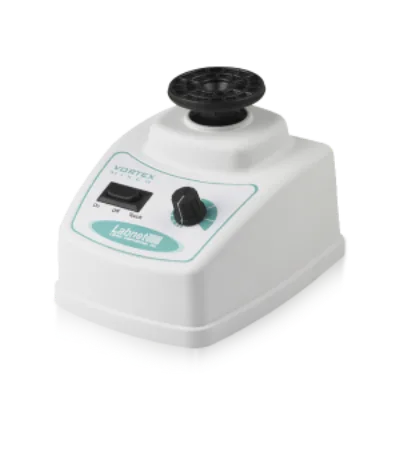
Vortex mixers for efficient sample preparation in the laboratory
The vortex mixer category includes specialised laboratory shakers that enable rapid mixing of samples in test tubes or centrifuge tubes through circular vibrations. With models such as the Vortex Mixer VX-200 or the classic Vortex-Genie 2, devices are available that are designed for intensive use in chemical and biological laboratories.
Analogue and digital control variants
When selecting a vortex mixer, the type of control is crucial. Analogue models allow for stepless adjustment of intensity, while a digital vortex mixer enables precise speed setting in the range of 200 to 3000 RPM. This is particularly important for validated processes where high reproducibility of mixing parameters is required.
Functionality and attachments
Modern vortex mixers offer various operating modes. The press-to-mix function automatically activates the shaking process through light pressure on the attachment, which simplifies handling for high sample throughputs. Special versions feature a combi-attachment, which increases flexibility and allows for the accommodation of different vessel sizes without time-consuming changes.
Frequently asked questions about vortex mixers
Here you will find answers to technical and application-related questions regarding vortex mixers in laboratory operations.
What are vortex mixers used for in the laboratory?
Vortex mixers are primarily used for the rapid mixing of liquids in test tubes, Eppendorf cups or other small vessels to homogenise suspensions or dissolve reagents.
What advantage does a digital vortex mixer offer over analogue models?
A digital vortex mixer allows for the precise setting and display of the speed, often between 200 and 3000 RPM, which is essential for standardised protocols and reproducible experimental conditions.
What characterises the press-to-mix function?
With the press-to-mix function, the shaker motor only starts when pressure is applied to the shaking attachment, allowing for fast, one-handed operation.
Can vortex mixers be used for continuous operation?
Many models, such as the Vortex-Genie 2, feature a switch for continuous operation in addition to touch operation, allowing for longer mixing processes without manual holding.
What is the significance of a combi-attachment for the Vortex Mixer VX-200?
A combi-attachment allows different vessel types, such as individual test tubes or entire racks, to be processed simultaneously or sequentially without needing to change the attachment.
How is stability ensured at high speeds?
Vortex mixers are equipped with a high dead weight and special suction feet or rubber feet to remain stable on the laboratory bench even at maximum speeds of up to 3000 RPM.
How do I receive a quote for specific laboratory shakers?
For models such as the VX-200 or digital vortex mixers, professional customers can request an individual quote via the product list to receive project-specific terms.