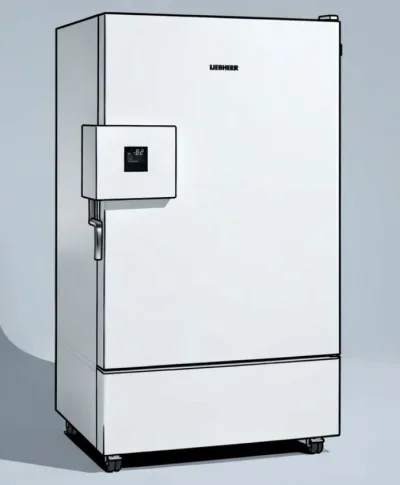
Liebherr -86°C Ultra-Low Temperature Freezer SUFsg 7001 MediLine, Used Equipment Year of Manufacture 2023
item number: 39418
736 l capacity, 480 box storage capacity, power consumption 8.1 kWh/day
€ 18.400,00
Promotional Price € 7.500,00

-86°C Ultra-low temperature freezers ensure the long-term storage of biological samples from -70°C — the threshold at which enzymatic and chemical processes almost completely cease. The range extends from 7-litre benchtop units and under-counter compact models to 960-litre upright units with dual cooling systems and frequency-controlled compressors — available as new, energy-saving, or refurbished models from certified brand manufacturers.
item number: 39418
€ 18.400,00
Promotional Price € 7.500,00
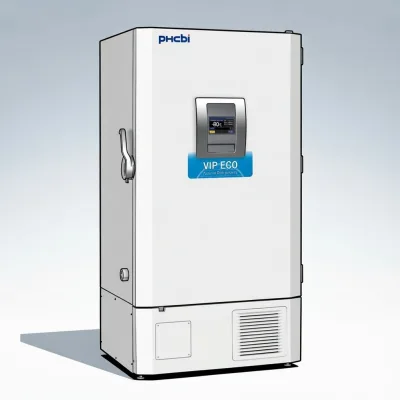
item number: 39416
€ 20.200,00
Promotional Price € 8.500,00
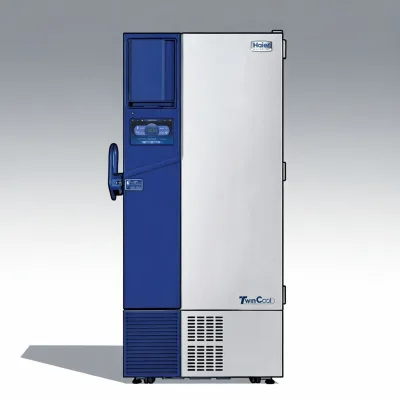
item number: 39413
€ 20.000,00
Promotional Price € 8.500,00
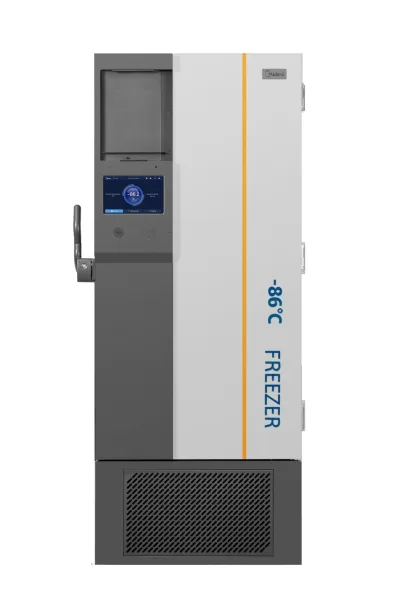
item number: 40923
€ 11.800,00
Promotional Price € 8.260,00
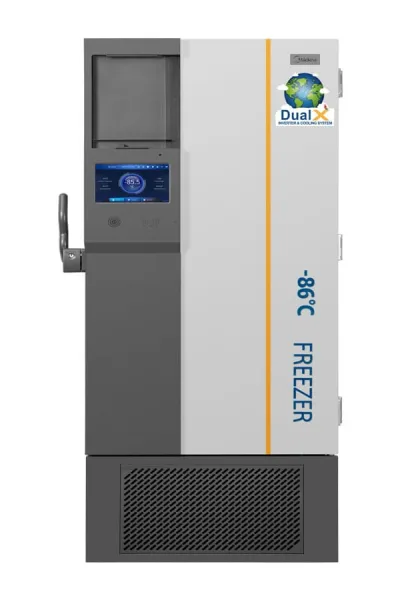
item number: 40906
€ 12.700,00
Promotional Price € 8.890,00
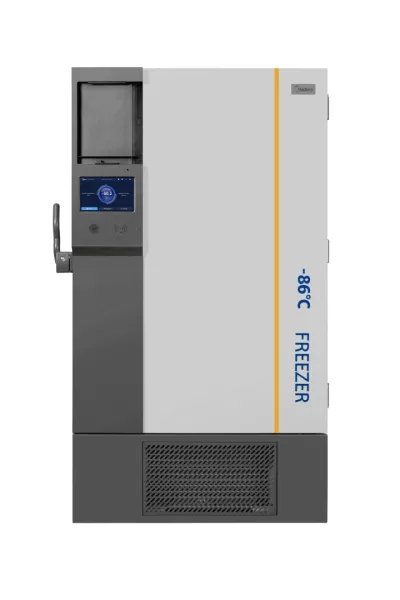
item number: 40925
€ 13.900,00
Promotional Price € 9.730,00
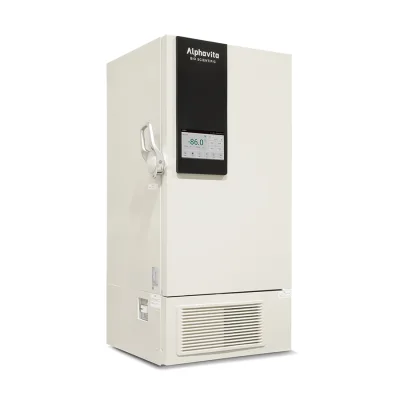
item number: 40186
List price € 13.200,00
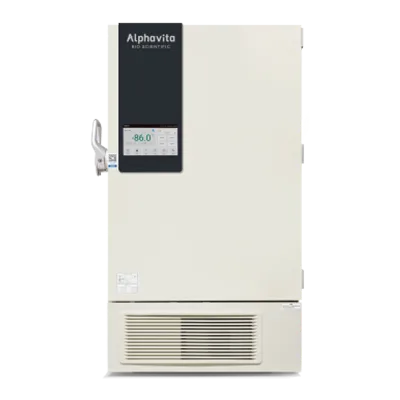
item number: 39987
List price € 14.400,00
item number: 40005
List price € 15.600,00
item number: 40139
List price € 6.800,00

item number: 40730
List price € 6.300,00
item number: 15266
List price € 5.850,00
item number: 15267
List price € 6.750,00
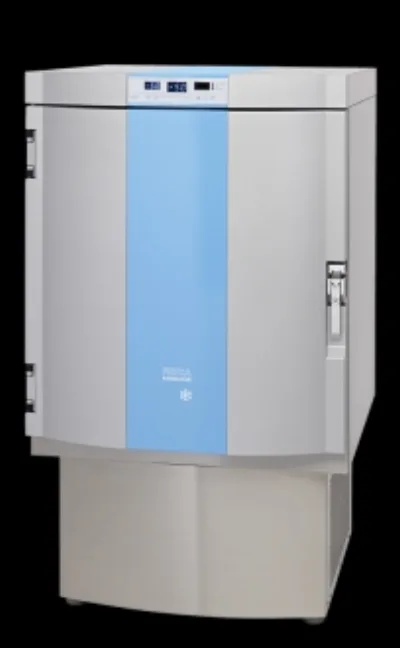
item number: 15280
List price € 8.950,00
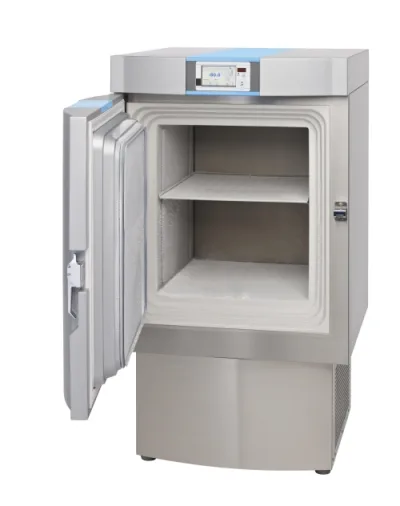
item number: 15281
List price € 9.690,00
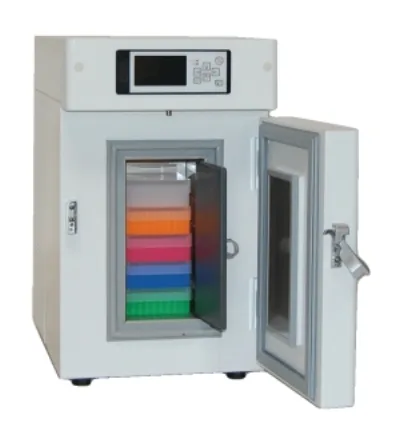
item number: 15214
List price € 6.945,00
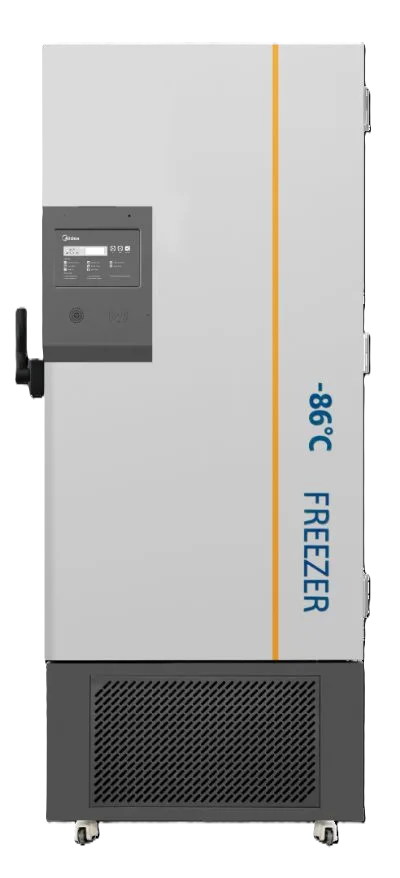
item number: 40155
List price € 7.700,00
The classic cascade principle has been further developed in several areas in recent years:
-86°C Ultra-low temperature freezers are standard in molecular biology, pharmaceutical research, biotechnology, and clinical diagnostics: storage of DNA, RNA, and proteins, biobanking of cell lines for CAR-T and cell therapy programmes, interim vaccine storage, and strain collections in universities and research institutions. In GMP-regulated environments, devices are qualified (IQ/OQ/PQ). WLAN data loggers with alarm forwarding ensure seamless temperature logging.
The most important questions regarding technology, selection, and operation of -86°C ultra-low temperature freezers — from the functionality of cascade cooling to GMP-compliant documentation.
-86°C ultra-low temperature freezers work with a two-stage cascade principle: a first compressor circuit pre-cools to approx. -40°C and enables the second to reach temperatures down to -86°C. Conventional single-stage compressors cannot physically achieve this temperature lift. In practical operation, devices are mostly operated at -75°C to -80°C to buffer temperature fluctuations when the door is opened.
From -70°C, biological processes largely come to a standstill. Suitable for long-term storage at -86°C are DNA, RNA, and proteins for molecular biological analysis, cell lines and primary cells for cell therapy programmes, enzymes and antibodies, vaccines and biopharmaceuticals, as well as tissue samples and microorganisms in strain collections and biobanks.
A single-compressor device has a single two-stage cooling circuit — if this fails, the internal temperature rises to critical values within a few hours. A dual cooling system consists of two independent circuits: if one fails, the second maintains the storage temperature permanently at -70°C to -80°C until the device can be serviced. For samples with a high risk of irreversibility, the dual cooling system is the safer choice.
Consumption depends heavily on volume, technology, and operating temperature. Compact models up to 130 litres with frequency-controlled compressors achieve under 4 kWh/day at -75°C. Large-volume upright units from 700 litres range between 7 and 9 kWh/day depending on the model. Frequency-controlled compressors adjust the output to the actual cooling load and measurably reduce consumption compared to conventional models.
Yes. The basis for qualification (IQ/OQ/PQ) is the supplied manufacturer documentation as well as calibration certificates for temperature sensors. For seamless temperature logging, a data logger — integrated or external — is required. WLAN data loggers with alarm forwarding via email or SMS enable continuous monitoring even outside of operating hours.